
Florida Homeschool Portfolio Requirements: A Family-Friendly Guide
Homeschooling in Florida is a wonderful journey filled with learning, flexibility, and family connection. But with that freedom comes the responsibility of meeting state requirements—especially when it comes to maintaining a homeschool portfolio.
If you’re starting out or looking for reassurance that you’re on the right track, this guide will walk you through everything you need to know about Florida homeschool portfolio requirements.
What Is a Florida Homeschool Portfolio?
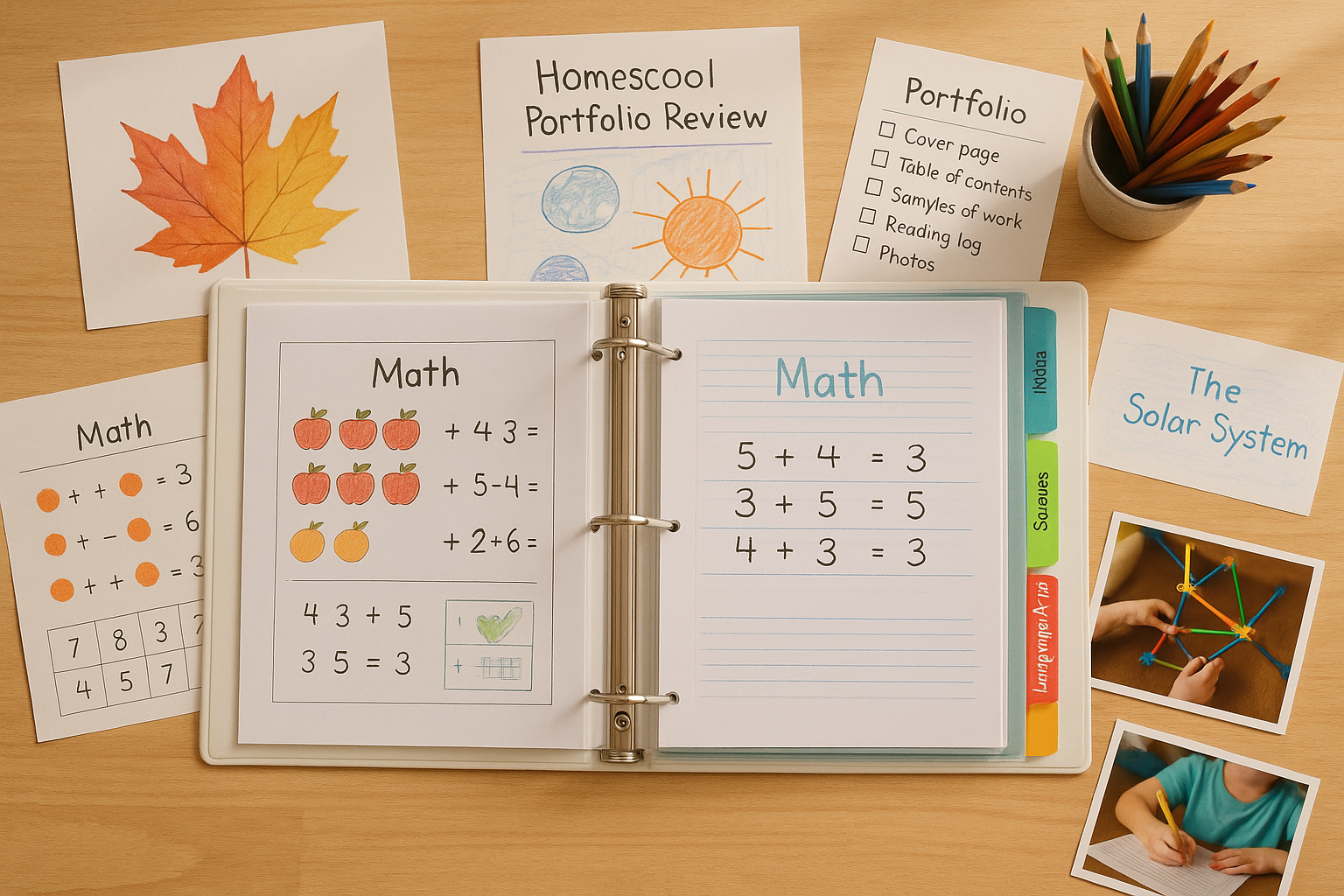
In Florida, homeschool families are required by law to keep a portfolio of records and materials for each homeschooled student. Think of it as a scrapbook of your child’s learning journey, showcasing their progress, creativity, and accomplishments.
Your portfolio should include:
-
A daily log or record of activities – A planner, journal, or digital calendar noting what subjects and lessons were covered.
-
Samples of your child’s work – A variety of examples like math worksheets, writing assignments, science experiments, or art projects.
-
Reading list – Books your child has read, whether for schoolwork or leisure.
👉 Would you rather your child take a standardized assessment in lieu of a portfolio review? Take a peek at this post about testing in your homeschool!
When Is My Annual Evaluation Due?
Each Florida homeschooling family must complete an annual educational evaluation and submit it to their county school district on or before the anniversary of the date you sent in your letter of intent.
That means if you submitted your Letter of Intent to Homeschool on September 1st, your annual evaluation is due by September 1st each following year.
It’s a good idea to mark that date on your calendar as your homeschool anniversary and schedule your evaluation a few weeks early to avoid last-minute stress.
📅 Tip: We make this easy with flexible evaluation appointments—in person or virtually!

How Long Do I Have to Keep a Homeschool Portfolio in Florida?
Florida law requires you to keep each homeschool portfolio for two years. After that, you can archive it as a keepsake or recycle it. Many families choose to save portfolios as a beautiful record of their child’s growth.
Can the School District Ask to See My Portfolio?
Yes, the local school district can request to review your homeschool portfolio, but they must give you 15 days’ notice. This is rare, but it’s important to know your rights.
If you’re keeping a simple, organized portfolio, you’ll be prepared.
What Is My Homeschool Evaluator Looking For?
Each year, Florida homeschool families are required to submit an annual evaluation. Evaluators aren’t looking for perfection—they simply want to see evidence of educational progress.
Here’s what homeschool evaluators, like those at The Homeschool Hive, typically look for:
-
A consistent record of learning – Learning logs, lesson notes, grades or proof of learning (progress) over time.
-
Work samples that show growth – Beginning and end-of-year assignments, writing samples, math work, creative projects, photos of field trips,
-
A reading list – Books your child has read independently or with your family.
-
Evidence of progress – This doesn’t mean mastering every subject, but showing that your child is moving forward in their education.
🌿 Ready for your annual evaluation? Schedule your review with one of The Homeschool Hive’s compassionate homeschool evaluators—we make the process simple and stress-free.
✨ The Homeschool Hive provides friendly, supportive evaluators who understand homeschooling from a family perspective. We offer:
-
Portfolio reviews – Gentle, encouraging evaluations that meet Florida requirements.
-
Testing options – If your family prefers standardized testing, we provide flexible and supportive test administration.
-
Consulting services – Personalized homeschool consulting to help you with curriculum choices, planning, and navigating Florida homeschool laws.
Our goal is to make the evaluation process stress-free and uplifting, so you can focus on the joy of homeschooling.

Tips for Making Your Homeschool Portfolio Simple and Family-Friendly
Keeping records doesn’t have to be overwhelming. Here are some family-friendly ideas:
-
Use a 3-ring binder – Slip in dated samples of work, notes, and reading lists.
-
Go digital – Create a digital folder with scanned work, photos of projects, and electronic logs.
-
Make it fun – Let your child help choose pieces of work to showcase. This builds pride and involvement.
-
Keep it consistent – Spend just 5 minutes a day jotting notes or filing a sample. Small steps prevent big stress later.
Why the Portfolio Matters
While the homeschool portfolio requirement in Florida is a legal responsibility for some, it’s also a gift. It allows you to look back at your child’s growth, celebrate milestones, and reflect on how far they’ve come.
Many parents find that flipping through past portfolios is one of the most rewarding parts of the homeschooling journey. It’s not just about compliance—it’s about cherishing memories.
And when it’s time for your annual evaluation, The Homeschool Hive’s evaluators are here to help you feel confident and supported.

UA vs. PEP: Do I need to maintain a Portfolio?
You may have heard about FL state scholarships available to homeschooling families. FL currently offers two homeschooling scholarships - “UA (Unique Abilities) ” and “PEP” (Personalized Education Program). These designations are important because they determine who you report to—and whether you’re required to submit an annual evaluation to your county.
Here’s the breakdown:
UA (Unique Abilities) Families - FES Family Empowerment Scholarship
UA families homeschool under Florida Statute 1002.41, which requires:
-
Submit a Letter of Intent to your local county school district.
-
Maintain a portfolio of records and materials.
-
Complete an annual educational evaluation.
-
Submit that evaluation to your county by the anniversary of your Letter of Intent.
These are the traditional Florida homeschool requirements most families follow—and exactly what this article outlines.
PEP (Personalized Education Program) Families
PEP families operate under Florida’s new Personalized Education Program statute (1002.395), which gives parents even more flexibility—but also changes how accountability works.
PEP Students:
-
Do not file a Letter of Intent with their county.
-
Do not submit portfolios or evaluations to the county.
-
Are held accountable to their Scholarship Funding Organization (SFO) instead—such as Step Up for Students.
- Are required to take an annual standardized test and submit the scores to the SFO.
While you’re not required to submit to your county, The Homeschool Hive can still support your family with testing options, portfolio consulting, and educational guidance that align with PEP expectations.
📘 Need help understanding the difference between UA and PEP?
🧠 Need to schedule PEP testing?
Schedule a consultation or testing with The Homeschool Hive—we’ll help you determine which path is right for your family and what’s required for compliance, or get you tested and on your way!
Final Thoughts
Florida’s homeschool laws may sound strict at first, but once you understand the portfolio requirements and evaluation process, it becomes a simple rhythm of documenting your child’s unique education. With a little organization and guidance, your portfolio can be both a legal safeguard and a treasured family keepsake.
So take a deep breath, grab that binder or open that digital folder, and know that The Homeschool Hive is here to walk alongside you with evaluators, testing options, and homeschool consulting services designed to support your family every step of the way.
Share:
5 Simple Ways to Make Homeschooling More Fun (for Everyone!)
Homeschool 101: Getting Started with Homeschooling in Florida