5 Ways Hands-On Activities Help Children Learn
Have you ever considered the wobbly block tower on your living room floor as a tiny science lab? Your little learner moves one block, watches what happens, and tries again. You can almost see the clipboard in those tiny hands as they work out what makes the tower stand.
That is hands-on learning in action. Children get to touch an idea, test a hunch, and see what changes. Then they get to tell you all about it.
You don’t need a closet full of supplies, either! A sandwich, a sheet of paper, or a few blocks will do. Here are five ways to make these moments count.
1. Make New Ideas Easier to Understand
Imagine your child watching you cut their sandwich in half, then in half again. Suddenly, those fractions on the math page are sitting right there on the lunch plate!
Let your child put the pieces back together and ask, “How many quarters make a whole? What do you notice about two quarters?”
Now the numbers have a shape your child can recognize. The same idea works with using chips for counting money, measuring cups for volume, or using blocks for addition. If you want reusable pieces for lessons like these, our manipulatives collection is a place to look.
Try it! Pick one idea from this week’s math lesson and build it with something you have at home.

2. Let Children Test Their Ideas
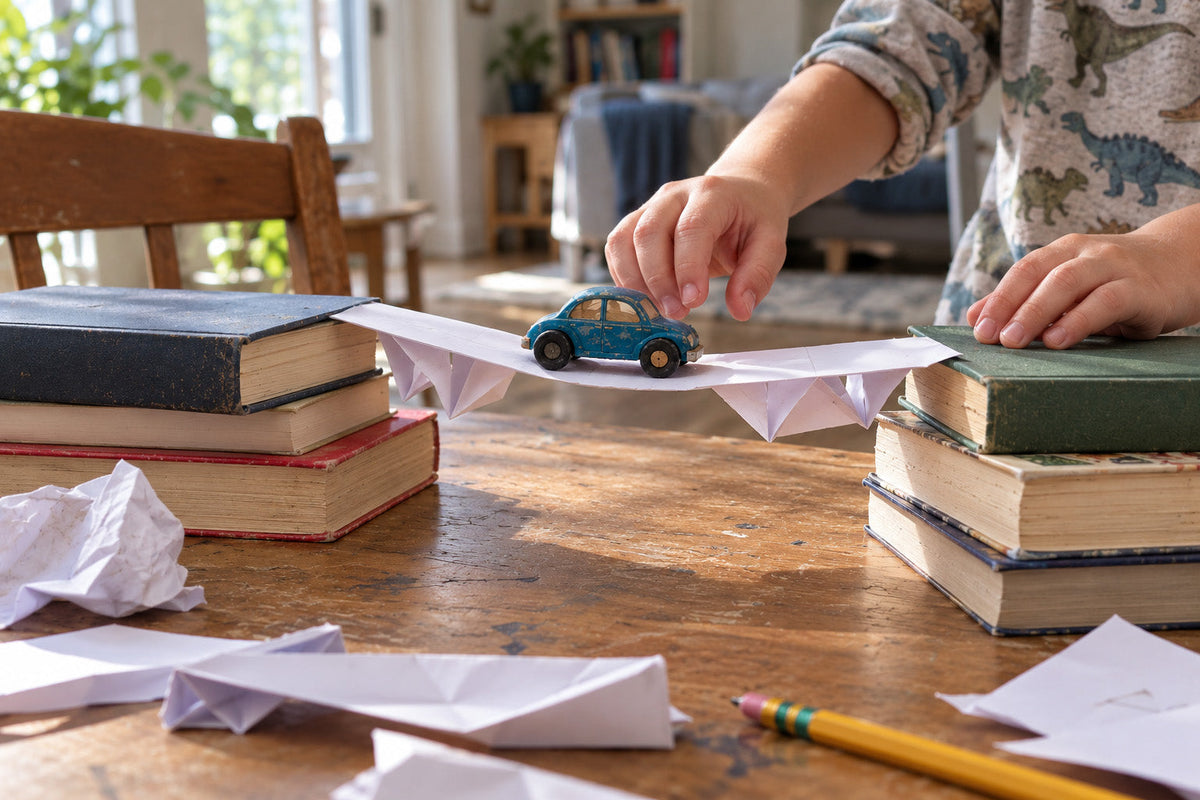
The toy car rolls onto a paper bridge, and down it goes. Your child might be ready to rebuild the bridge before the car even hits the floor. Pause for a moment and ask, “What do you think happened?” Give them time to look. They may spot something you missed, and now you have a question to explore together.
Maybe they’ll fold the paper, move the supporting parts closer, or try a lighter car. Encourage one change at a time so they can tell what helped. That’s a real experiment, even when the equipment is paper and a toy car.
Try it! Build a block tower together. After the first try, ask, “What could we change to make it steadier?”

3. Give Children Something to Explain
Your child draws a river that takes a surprising turn around a mountain. Why did it go that way? Ask, and you might hear a whole story about where the water can flow. A finished map can’t tell you all of that. When children explain their choices, you get a peek at what they understand.
Questions like “How did you decide?” and “Can you show me?” leave room for an answer.
Some children will explain with words; others will point, draw, or demonstrate first. All of those are ways into a conversation. Games can make this feel natural, and you can browse our games collection for helpful ideas.
Try it! At the end of an activity, ask your child about one choice they made. Let them finish their thought before you add yours.
4. Put Planning Into Practice
The ingredients are on the counter, and your child is already reaching for the mixing bowl. Before anything goes in, ask, “What do we need to wash? What comes first?” Gathering, measuring, and pouring turn dinner time into a chance to make a plan and follow it.
A younger child might measure ingredients you’ve set out. An older child might read the recipe and decide what to prepare first. If the kitchen is a favorite learning spot at your house, our cookbooks for kids and teens can spark some yummy inspiration. Of course, stay close when sharp tools or heat are involved!
Try it! Before your next project or snack, ask your child to gather the supplies and tell you the first two steps.

5. Help Children Learn From Each Attempt
That puzzle piece has been turned every which way, and it still won’t fit. You can practically hear the sigh before it happens. We all know that moment. Give your child a moment to reset and take a breath if they need to. Then ask, “What could we try next?”
You can support your child without taking over. Try “What have you tried so far?” or “Would you like a hint or a little more time?” If frustration is climbing, make the task smaller or take a break. A first attempt gives your child information for the next one; it doesn’t have to be the final answer.
Try it! When an activity is done, ask, “What changed between your first try and your last try?” Listen for what they notice, not just the result of the finished product.
Start With One Lesson
You don’t need a special activity for every lesson. Start with one lesson your child is working on and give them a new way to handle it, test it, or explain it.
Wondering what that could look like in your home? You can contact us and tell us what your child is learning. We’d love to help you find a good place to begin!
Share:
The Story Behind The Homeschool Hive