
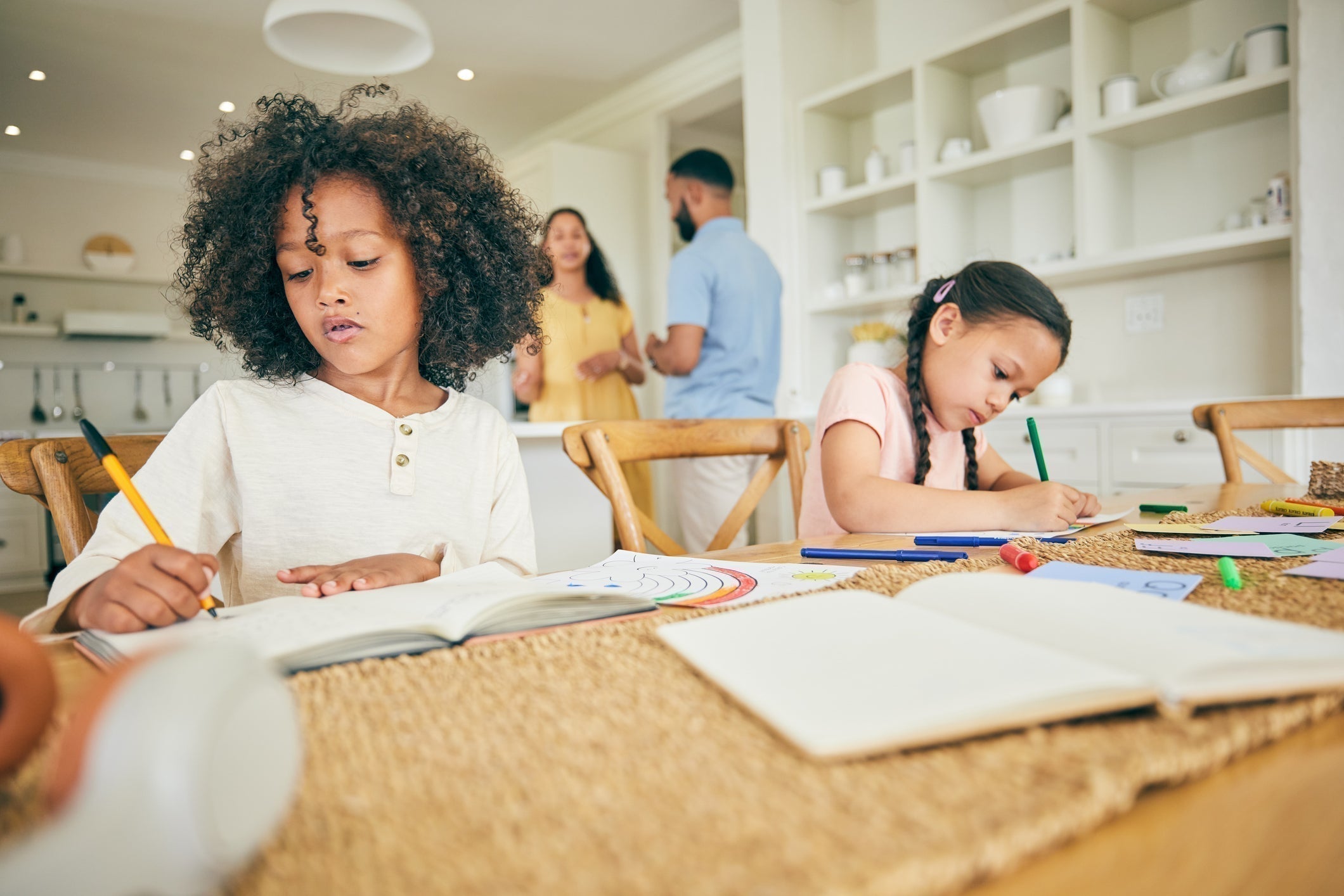
Creating a Homeschool Routine
How to ease into a homeschool routine that works for your family!
Back-to-routine season is here! As you settle into a new homeschool year, remember that your homeschool schedule doesn’t have to look like a “traditional school day” at home. There’s no need for bells, rigid time blocks, or feeling like you’re behind when the day doesn’t go exactly as planned.
Instead, focus on creating a homeschool routine with a consistent rhythm. A familiar flow gives your family structure while leaving room for the flexibility that makes homeschooling work.
Homeschool Rhythm vs. Homeschool Schedule
A traditional schedule assigns specific times to each task: math at 9:00, science at 10:15, lunch at noon. But when breakfast runs late, an appointment pops up, or a lesson takes longer than expected, it can be easy to feel like the whole day is off track.
A homeschool rhythm focuses on order rather than the clock. Maybe your family starts with breakfast and morning tasks, moves into focused learning, takes a break, and saves lighter activities for the afternoon.
The exact timing may change from day to day, but a familiar flow helps everyone know what comes next. When you’re homeschool planning, think about the natural rhythm of your family rather than trying to build the perfect hour-by-hour schedule.
If having a visual plan helps your family stay organized, a Homeschool Essentials Daily Planner can help you map out your days and weeks while still leaving room for flexibility.
What Does a Homeschool Daily Routine Look Like?
Every family is different, but a simple homeschool daily routine might include:
- A consistent start. Choose something that signals the beginning of your homeschool day, whether that’s breakfast, chores, a read-aloud, or a little movement.
- A focused learning block. Plan core subjects or more challenging homeschool curriculum for the time of day when your child tends to focus best.
- Plenty of breaks and movement. Build in opportunities to stretch, play, grab a snack, or head outside before jumping back into learning.
-
A lighter afternoon. Save reading, projects, hands-on learning with manipulatives, STEM and STEAM activities, educational games, or free time for later in the day when energy may start to shift.
Your homeschool routine doesn’t have to be complicated. The goal is to create a flow that feels natural, flexible, and sustainable.

Things to Consider When Building Your Homeschool Rhythm
Every family’s homeschooling rhythm will look a little different. As you find what works for yours, consider:
- Your child’s age and attention span. A kindergartener’s focused learning time will look very different from a middle or high schooler’s. If you’re homeschooling multiple children, you may also need to alternate independent work with one-on-one learning time.
- Your family’s natural energy. Pay attention to when your child learns best. If math consistently goes better in the morning, make that part of your rhythm. Save reading, art, educational games, or hands-on projects for times when focus and energy are lower.
- Opportunities for independent learning. When your children are ready, build in activities they can complete independently. This can be especially helpful when you’re homeschooling multiple ages and need dedicated time with each child.
- Your weekly rhythm, not just your daily routine. Not every subject or activity needs to happen every day. Science experiments might happen twice a week, Wednesdays could be for co-op, or Fridays could be lighter days for field trips, projects, reading, and catching up.
- A natural stopping point. Homeschooling doesn’t have to fill the entire day. Having a general point when focused schoolwork ends can give everyone a sense of completion and leave room for play, hobbies, extracurriculars, and family time.
Ease Into Your Homeschool Routine
You don’t have to do everything on day one! Trying to fit every subject, co-op, activity, and enrichment opportunity into the first week can quickly become overwhelming.
Instead, start with the basics. Establish your morning routine and introduce one or two core subjects, such as math and language arts. Once your family feels comfortable with that flow, you might add science or social studies, followed by electives, enrichment, co-ops, or other activities.
If you’re still deciding what to teach, shop homeschool curriculum by grade to explore options based on where your child is in their learning journey.
Building your routine gradually also gives you a chance to see what actually works before filling your calendar.
Make Your Homeschool Routine Your Own
Maybe you’re new to homeschooling and figuring out what your days should look like for the first time. Maybe you’ve been homeschooling for years and want some fresh ideas. Or maybe last year’s routine simply stopped working.
Wherever you’re starting, pay attention to what makes learning easier for your family.
If mornings were consistently stressful, try starting a little slower. If your child struggled to focus through several subjects in a row, add more breaks or hands-on activities. If your days always felt rushed, consider whether you’re trying to accomplish too much at once. If a particular homeschool curriculum created daily frustration, it may be worth exploring a different approach.
You don’t need to change everything at once. Start with one adjustment, give it some time, and build from there.
Give Yourself Room for Real Life
Appointments happen. Kids get sick. Some mornings are harder than others, and sometimes beautiful weather is a pretty good reason to take learning outside.
That doesn’t mean your homeschool routine isn’t working.
On some days, you may get through every lesson you planned. On others, you might finish math, read together, and call it a day. A flexible rhythm gives you a framework to return to without making every unexpected change feel like you’ve fallen behind.

Get the Pieces in Place
Once you have a general rhythm in mind, make it easier to follow by getting the practical pieces ready.
Choose the homeschool curriculum that works for your child, keep frequently used books and supplies somewhere accessible, and consider using a homeschool planner to keep lessons, activities, and priorities organized.
It can also help to have a few manipulatives, educational games, books, and STEM activities ready for days when your child needs a different way to learn.
Need help figuring out what could work for your family? Book a homeschool consultation and we’ll help you find curriculum, resources, and ideas that fit your homeschool.
Your homeschool routine doesn’t have to look like anyone else’s. Start with what works for your family, stay open to adjusting along the way, and build from there. As always, feel free to reach out to our homeschool experts at contact@thehomeschoolhive.com with any questions. We’re here to help!
Share:
How to Choose the Right Homeschool Curriculum
The Story Behind The Homeschool Hive